Mature Elm Along a Park Drive (the species)Mature Elm Along a Park Drive (the species)
The American elm is the tree that used to arch over Main Street before the disease took them out. Princeton is one of the selections that came through it, tolerant enough that people are planting elms again. You get the vase shape, fast growth and a tree that is genuinely native here. Tolerant is not immune, and we will tell you exactly what that means.
Off-the-lot means you pick it up and plant it yourself. Planted means we deliver it, plant it right, and back it with our Year One warranty. Tap a price to add it to your list, then send the whole list to Matt in one request. Want several of one tree, or a mix? Add them all and Matt quotes the count.
What does "gallon" mean? It is the size of the container the tree is growing in, not how many trees you get. The bigger the number, the bigger and more established the tree you take home, so a 30 gallon tree gives you shade and privacy years sooner than a 15 gallon one.
Full warranty for one year after planting. This comes with any needed care and free check ups upon request. All needed treatments or pruning are included for first year. If tree fails to thrive, no cost replacement.
Picked, delivered, and planted by a Board Certified Master Arborist.
Follow-up visits through the whole first year, not a wave goodbye.
Deep root feeding and structural pruning while it takes hold.
That is the warranty. No fine print, no chasing us down.
Pick a spot with full sun. This one matures past 40 feet, so give it room: at least 20 feet from the house and 15 feet from other trees. Heavy Missouri clay is not a problem for this tree. Growth rate is fast, so you know what to expect season to season.
Not sure about your spot? Send us a photo of the yard with your quote request and we will tell you straight if it will work.
Water deeply once or twice a week through the first growing season, and step it up in July and August heat. Keep a 2 to 3 inch mulch ring around the base, pulled back from the trunk. Spring and fall are both good planting windows in mid-Missouri.
Or skip the checklist: have us plant it and Year One covers all of this. We feed it, prune it, and come back to check on it.
Request a quote and tell us where it is going. We will confirm availability, delivery, and a planting date.
Straight answers to what people ask before they buy. Anything else, just call.
Well, but not perfectly, and you should have the real numbers. USDA inoculation trials in the early nineties showed meaningful tolerance, though not the near immunity claimed for Valley Forge or New Harmony. A 2016 report followed 100 Princeton elms planted across three states between 2001 and 2007: nine came down with Dutch elm disease, seven of those died, and two were saved by hard pruning. Field survival under moderate disease pressure usually lands somewhere around 70 to 85 percent. The original Princeton elm itself was taken down in 2005 with 60 percent dieback. That is a good tree, not a guaranteed one.
Elm yellows, mainly, and it is worth knowing because Dutch elm tolerance does nothing for it. Elm yellows is a different pathogen spread by leafhoppers, American elm cultivars are broadly susceptible, and there is no cure once a tree has it. Elm leaf beetle and Japanese beetle will also chew the foliage some years without doing real harm. None of this is a reason to skip the tree. It is a reason to plant one elm among other things rather than a whole row of them.
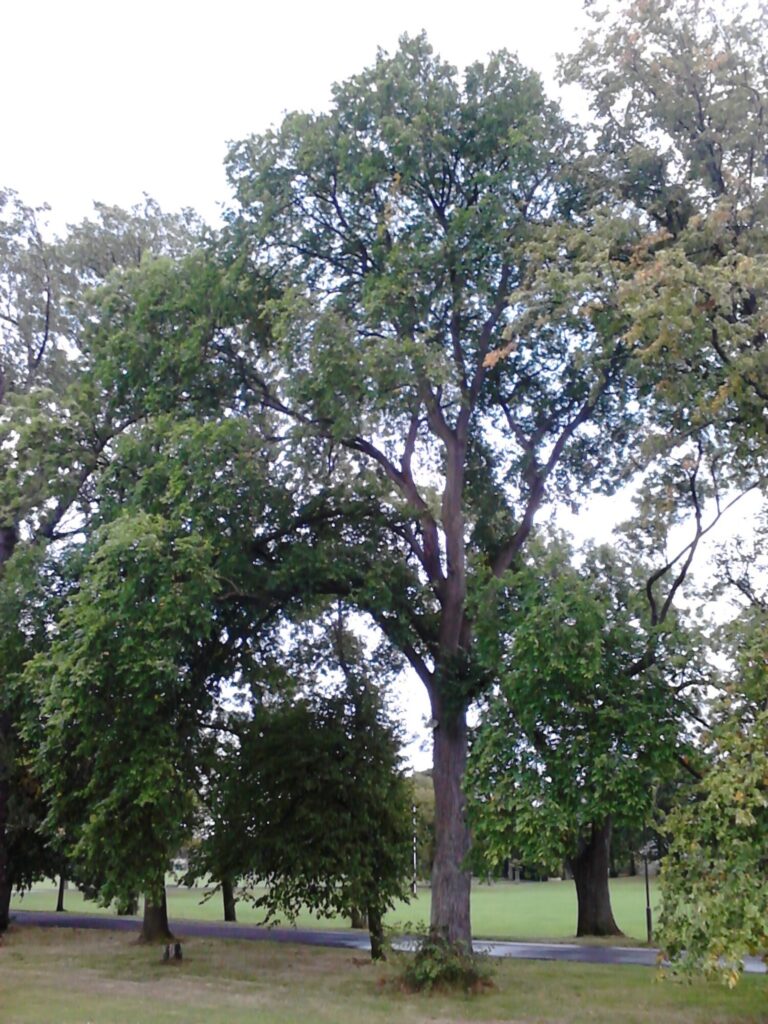
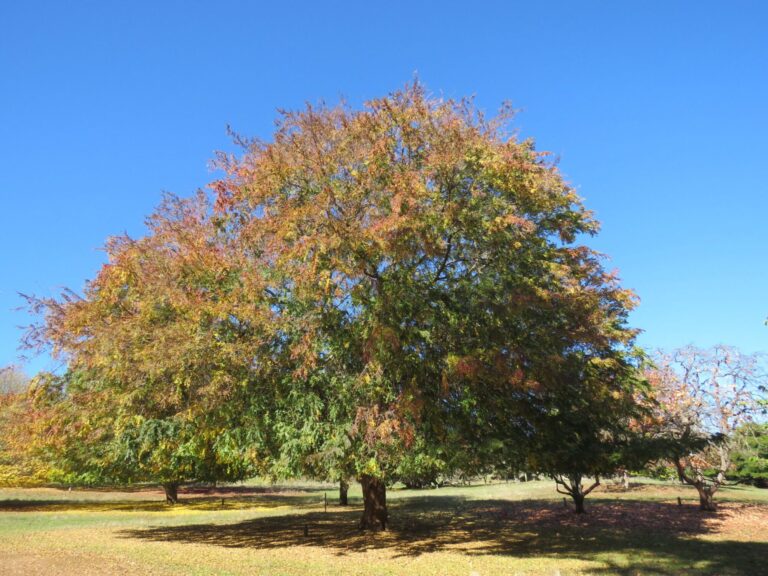
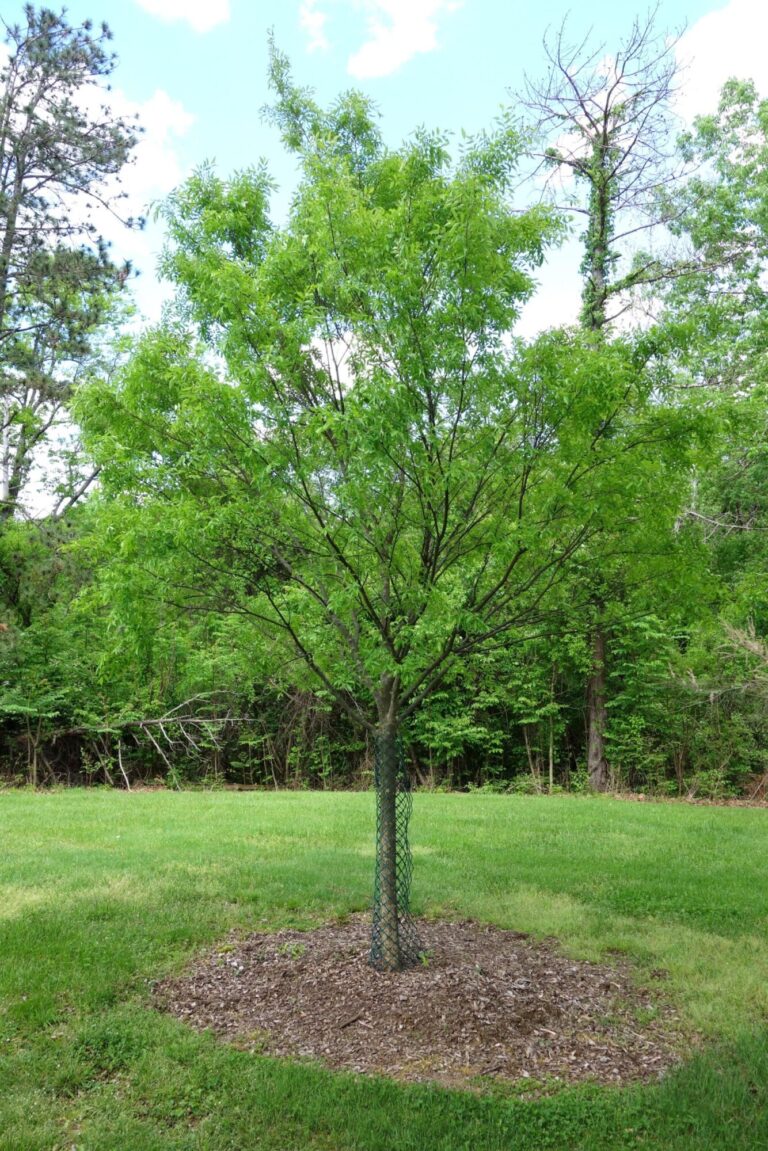
No. Princeton is a named 1922 selection and no free to use photo of it exists, so these show American elm, the species it came out of. The vase form, the lopsided leaf, the spring seed and the ridged bark are all correct for Princeton. What the photos cannot show is the disease tolerance, which is the only reason this particular clone is worth buying over a seedling elm.
Yes. Every tree on the lot has an off-the-lot price, you pick it up and plant it yourself. The planted price adds delivery, planting, and the Year One warranty.
Every planted tree comes with follow-up visits, deep root feeding, and structural pruning through its first year. If the tree fails in Year One, we make it right. You can extend it to Year Two for 20 percent and Year Three for 15 percent of the planted price.
Spring and fall are both good windows. Fall planting gives the roots time to settle in before summer heat. Request a quote and we will work out timing with you.
Yes. The whole lot is open to trade buyers. Ask about volume pricing when you reach out.
Tell us the spot and the job. A Board Certified Master Arborist picks with you, plants it right, and stands behind it for Year One.