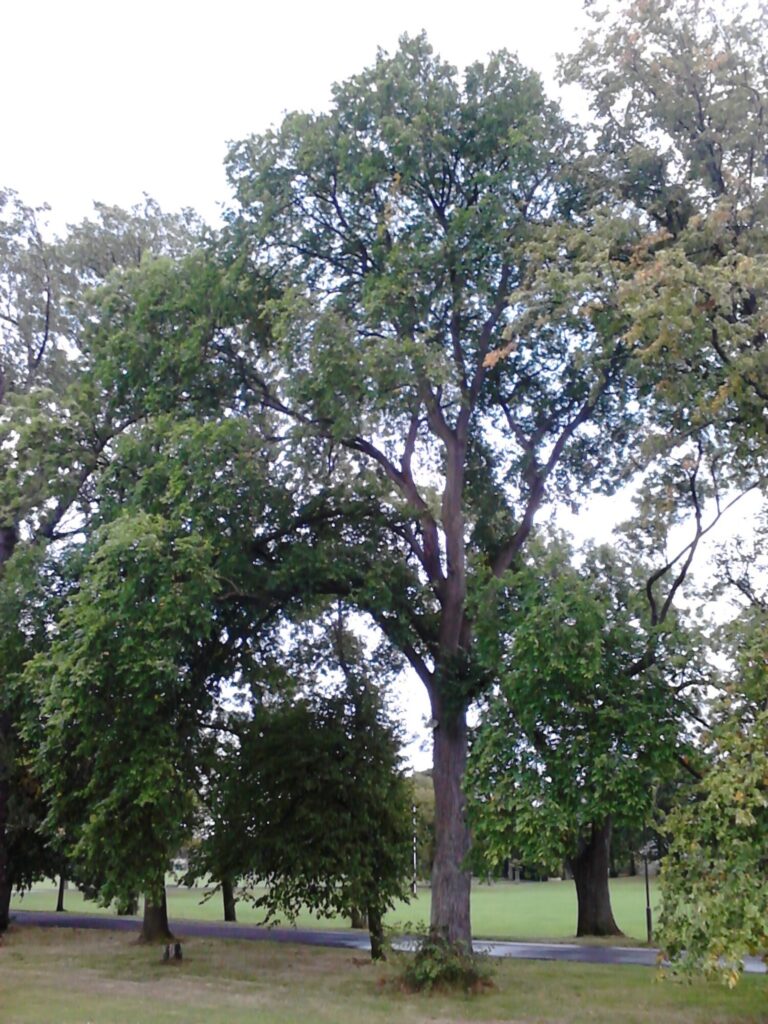
Mature Lacebark Elm in Fall (the species)Mature Lacebark Elm in Fall (the species)
Allee is the lacebark elm that grew up wanting to be an American elm. It holds a real vase shape at 50 to 70 feet, which none of the other Chinese elms do, and the bark flakes off in orange, grey and olive patches that look their best in January. Very strong resistance to Dutch elm disease and to elm leaf beetle.
Off-the-lot means you pick it up and plant it yourself. Planted means we deliver it, plant it right, and back it with our Year One warranty. Tap a price to add it to your list, then send the whole list to Matt in one request. Want several of one tree, or a mix? Add them all and Matt quotes the count.
What does "gallon" mean? It is the size of the container the tree is growing in, not how many trees you get. The bigger the number, the bigger and more established the tree you take home, so a 30 gallon tree gives you shade and privacy years sooner than a 15 gallon one.
Full warranty for one year after planting. This comes with any needed care and free check ups upon request. All needed treatments or pruning are included for first year. If tree fails to thrive, no cost replacement.
Picked, delivered, and planted by a Board Certified Master Arborist.
Follow-up visits through the whole first year, not a wave goodbye.
Deep root feeding and structural pruning while it takes hold.
That is the warranty. No fine print, no chasing us down.
Pick a spot with full sun. This one matures past 40 feet, so give it room: at least 20 feet from the house and 15 feet from other trees. Heavy Missouri clay is not a problem for this tree. Growth rate is fast, so you know what to expect season to season.
Not sure about your spot? Send us a photo of the yard with your quote request and we will tell you straight if it will work.
Water deeply once or twice a week through the first growing season, and step it up in July and August heat. Keep a 2 to 3 inch mulch ring around the base, pulled back from the trunk. Spring and fall are both good planting windows in mid-Missouri.
Or skip the checklist: have us plant it and Year One covers all of this. We feed it, prune it, and come back to check on it.
Request a quote and tell us where it is going. We will confirm availability, delivery, and a planting date.
Straight answers to what people ask before they buy. Anything else, just call.
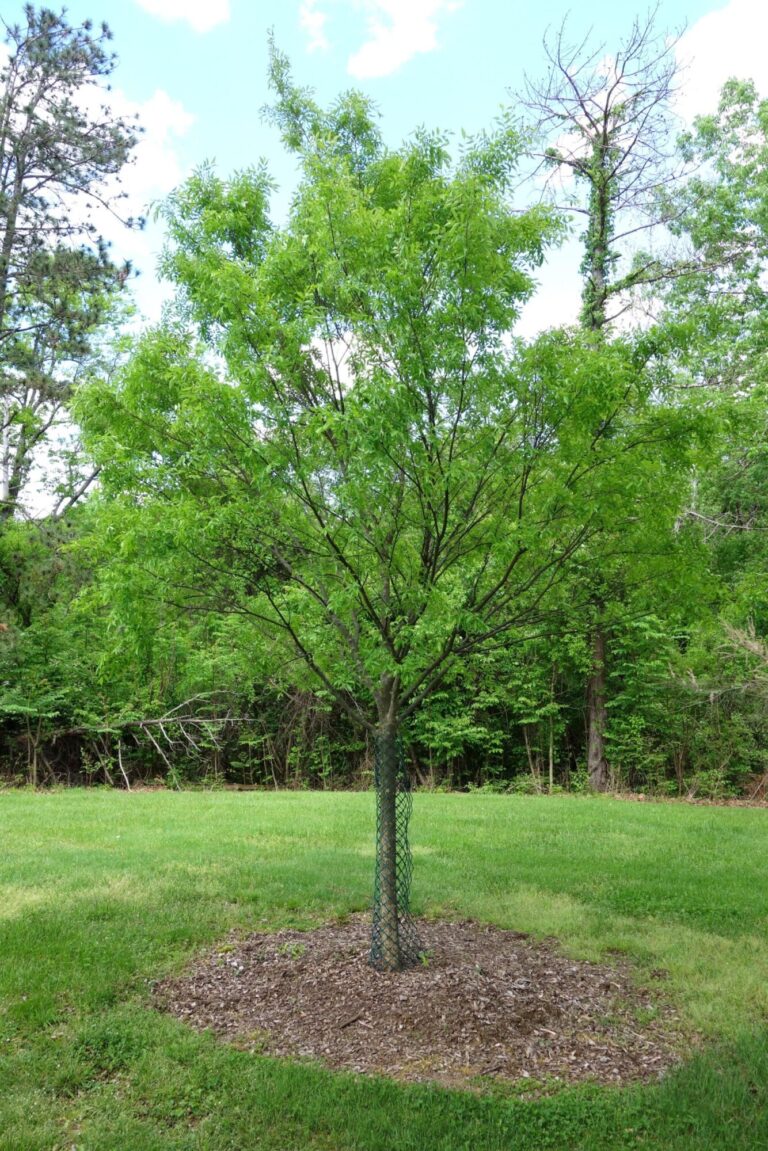
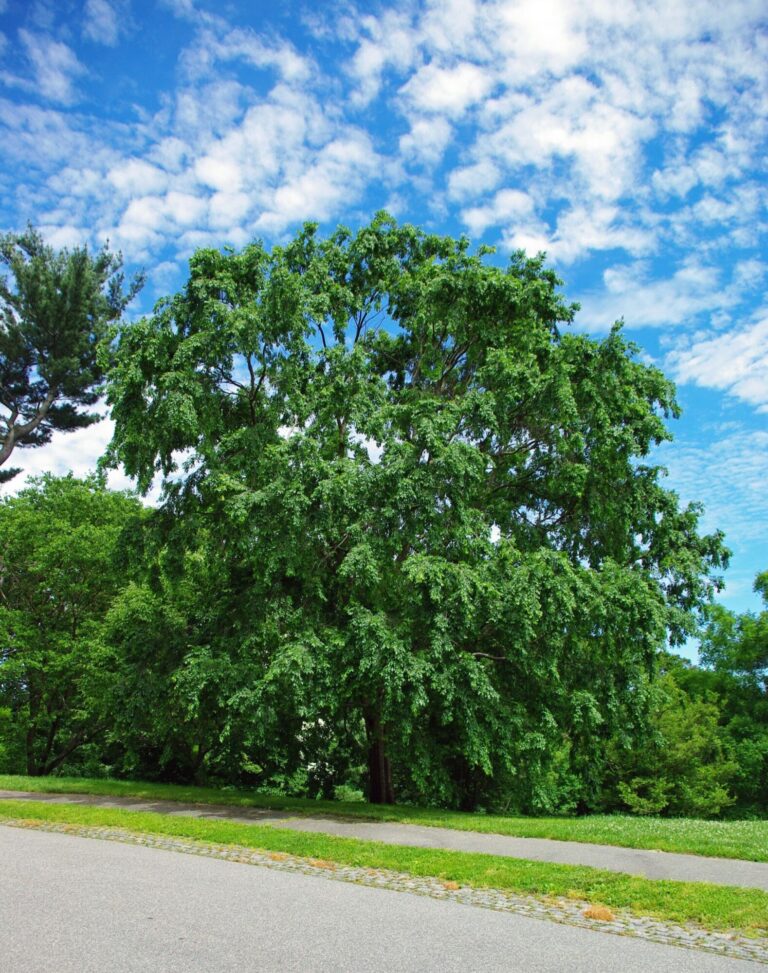
The three labeled this variety: the bark, the branch fork and the leaves. Those were all photographed on the named cultivar, which is registered as Ulmus parvifolia 'Emer II'. The full tree photos are the plain lacebark elm species, because nobody has published a free to use picture of a mature Allee. The species shots are honest about the size and the fall color. What they cannot show you is Allee's particular vase shaped frame, which is the reason growers picked it out.
It means the bark peels. Lacebark elm sheds thin flakes of outer bark all year and leaves behind a mottled patchwork of orange, grey, green and cream, and the pattern changes as the tree ages. On a young trunk it reads as scattered orange dots. On an old one it looks like camouflage. This is the main reason to plant one, and it is at its best in winter with the leaves gone, so put it where you will actually see it from the house.
All three are lacebark elm, so all three give you the bark, the small glossy leaf, and strong disease resistance. The difference is shape. Allee is the big one, 50 to 70 feet with a spreading vase crown, and it is the closest thing here to the old American elm silhouette. Bosque is more upright and oval with a tighter head. Everclear is the narrow one, a true column for a tight spot. Pick by the space you have, not by the foliage, because on that count they are nearly identical.
Yes. Every tree on the lot has an off-the-lot price, you pick it up and plant it yourself. The planted price adds delivery, planting, and the Year One warranty.
Every planted tree comes with follow-up visits, deep root feeding, and structural pruning through its first year. If the tree fails in Year One, we make it right. You can extend it to Year Two for 20 percent and Year Three for 15 percent of the planted price.
Spring and fall are both good windows. Fall planting gives the roots time to settle in before summer heat. Request a quote and we will work out timing with you.
Yes. The whole lot is open to trade buyers. Ask about volume pricing when you reach out.
Tell us the spot and the job. A Board Certified Master Arborist picks with you, plants it right, and stands behind it for Year One.